What Causes Roofing Nails to Back Out Over Time, and How Can It Be Prevented?
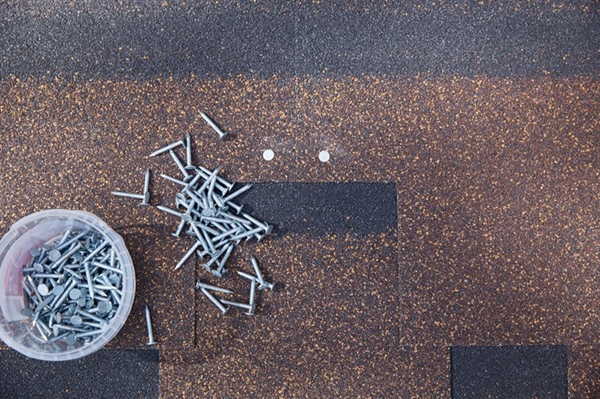
Loose or raised roofing nails are often first noticed as small bumps beneath shingles or as isolated leaks that appear without warning. Homeowners may assume the issue is minor, but nail back-out is a mechanical failure within the roofing system. Over time, changes in temperature, structural movement, moisture exposure, and improper fastening techniques can gradually force nails upward. When nails no longer hold shingles tightly against the deck, the roof becomes vulnerable to wind uplift, water intrusion, and accelerated deterioration.
Understanding why roofing nails back out requires examining the physics and material science behind roof assemblies. Thermal expansion cycles, wood deck movement, fastener selection, and freeze–thaw conditions all contribute to this process. The following sections break down how each factor affects nail retention and what building science reveals about long-term prevention. Twin Cities General Contracting has addressed these conditions across Minnesota’s demanding climate, where seasonal temperature swings and moisture exposure place roofing systems under measurable stress. For homeowners researching roofing systems, understanding nail performance is central to long-term durability.
Thermal Expansion and Contraction of Roofing Materials Causes Nail Movement
Roofing systems are exposed to daily and seasonal temperature fluctuations that create repeated expansion and contraction cycles. Asphalt shingles, metal panels, and even the roof deck expand when heated and contract when cooled. In Minnesota, surface temperatures on dark shingles can exceed 150°F in summer and fall below 0°F in winter. These temperature swings cause dimensional changes in roofing materials, placing cyclical stress on fasteners embedded in the deck.
As shingles expand, they exert lateral pressure around nail shafts. When temperatures drop and materials contract, that pressure reduces. Over thousands of cycles, this repetitive movement can gradually loosen the mechanical grip between the nail shank and the wood fibers of the decking. Smooth-shank nails are especially vulnerable because they rely solely on friction rather than mechanical locking. Over time, this micro-movement allows nails to migrate upward.
Modern roofing systems attempt to mitigate thermal stress by incorporating materials engineered for flexibility and impact resistance. Architectural shingles and advanced underlayments distribute expansion forces more evenly across the deck. Cool roofing technologies also reduce surface heat absorption, which lowers thermal stress loads on fasteners. These principles are widely applied in professional roofing installations designed for climates with extreme seasonal variation.
Wood Deck Movement and Structural Shifting Contribute to Nail Back-Out
Roof decking, typically constructed from plywood or oriented strand board (OSB), is a wood-based product that reacts to changes in humidity. Wood fibers absorb and release moisture depending on environmental conditions. When moisture content increases, the deck swells. When it dries, it shrinks. This dimensional change alters the grip strength around embedded nails.
Repeated swelling and shrinkage can enlarge the nail hole incrementally. As wood fibers compress and relax around the shank, holding power decreases. Over time, gravity and vibration from wind events can encourage nails to rise. In regions like Ham Lake, MN, where seasonal humidity shifts are significant, this cyclical movement is measurable and predictable under building science testing conditions.
Structural settling can also play a role. Minor truss movement, seasonal framing adjustments, and wind loading introduce subtle shifts in the roof assembly. Although these movements are small, they create repeated stress points at fasteners. Roofing systems designed with proper spacing, ventilation, and moisture control reduce the degree of deck movement and preserve nail retention strength.
Improper Nail Installation and Incorrect Fastener Selection Accelerate Failure
Installation practices are a primary cause of premature nail back-out. Nails that are under-driven leave the head slightly elevated above the shingle surface. This reduces clamping pressure and allows wind uplift forces to flex shingles around the fastener. Over-driven nails, on the other hand, can fracture shingle reinforcement mats, weakening the connection point and reducing holding strength.
Fastener selection also affects long-term performance. Building codes typically require galvanized steel roofing nails with adequate length to penetrate at least 3/4 inch into the deck or fully through it. Smooth-shank nails provide less withdrawal resistance than ring-shank nails, which feature ridges that mechanically interlock with wood fibers. Laboratory testing consistently shows that ring-shank nails offer significantly higher pull-out resistance under wind uplift conditions.
Advanced roofing installations increasingly rely on enhanced fastening patterns and higher-grade corrosion-resistant nails. Corrosion is another overlooked factor; as steel oxidizes, the diameter of the nail shank can reduce slightly, weakening its grip. Selecting code-compliant, corrosion-resistant fasteners and adhering to manufacturer nailing patterns is fundamental to preventing long-term fastener migration.
Moisture Intrusion and Freeze–Thaw Cycles Force Nails Upward
Moisture intrusion significantly weakens nail retention. When water penetrates beneath shingles due to damaged flashing, ice dams, or worn underlayment, it can saturate the wood deck. Wet wood loses compressive strength, reducing friction around nail shafts. As the deck dries, it may shrink unevenly, leaving nails less secure.
Freeze–thaw cycles amplify this issue. When trapped moisture freezes, it expands by approximately 9 percent in volume. This expansion exerts upward pressure on surrounding materials. If moisture accumulates around nail shafts, freezing temperatures can slowly push nails upward over repeated cycles. In northern climates, this process may occur dozens of times each winter.
Ventilation and drainage design play critical roles in moisture management. Proper attic ventilation reduces condensation beneath the deck, while synthetic underlayments provide improved moisture barriers compared to traditional felt paper. Roofing systems designed for storm resilience often include secondary water barriers to limit moisture exposure and reduce freeze–thaw stress on fasteners.
Proven Methods to Prevent Roofing Nails from Backing Out
Preventing nail back-out begins with correct fastener selection and installation technique. Ring-shank galvanized nails provide superior withdrawal resistance. Nails should be driven flush with the shingle surface without cutting into it. Proper penetration depth is required to maintain structural integrity under wind uplift loads defined by building codes.
Moisture control is equally important. Installing high-quality synthetic underlayment, ice and water barriers at eaves, and balanced attic ventilation reduces deck swelling and freeze–thaw stress. Impact-resistant shingles and architectural designs distribute load forces more evenly across the roof system, decreasing localized fastener stress.
Periodic inspection and maintenance also reduce long-term risk. Identifying raised nails early prevents shingle damage and water infiltration. Comprehensive roofing system design integrates fastening patterns, deck preparation, moisture barriers, and ventilation planning. For homeowners seeking professional assessment, Twin Cities General Contracting applies advanced installation methods tailored to Minnesota’s climate conditions.
Professional Roofing Support and Long-Term Protection
Addressing nail back-out requires evaluating the entire roofing assembly, not just replacing visible fasteners. Twin Cities General Contracting provides comprehensive roof inspections, system upgrades, and full replacements designed for high-wind and freeze–thaw environments. Their team integrates advanced underlayments, impact-resistant materials, and code-compliant fastening systems to strengthen long-term durability.
Whether dealing with thermal movement, deck shifting, installation deficiencies, or moisture damage, proper system design reduces recurring failures. Homeowners can call 763-258-3904 to discuss concerns or schedule an evaluation. To learn more about services or request assistance, contact us and connect with experienced roofing professionals who understand the structural demands of Minnesota weather.